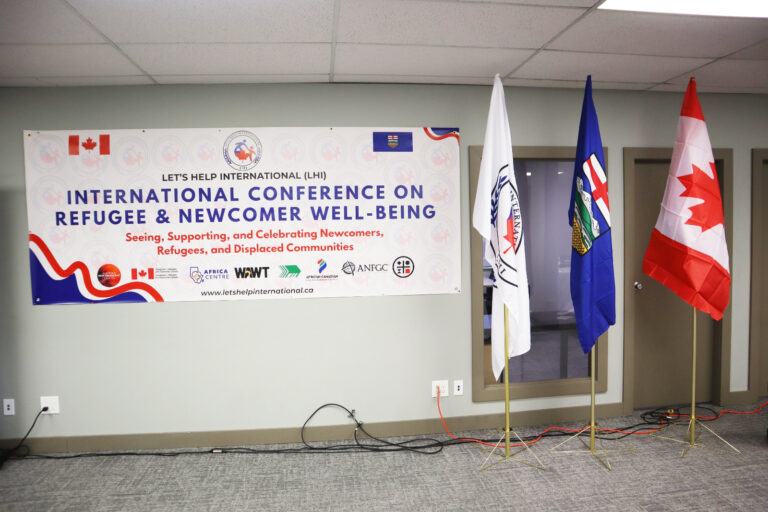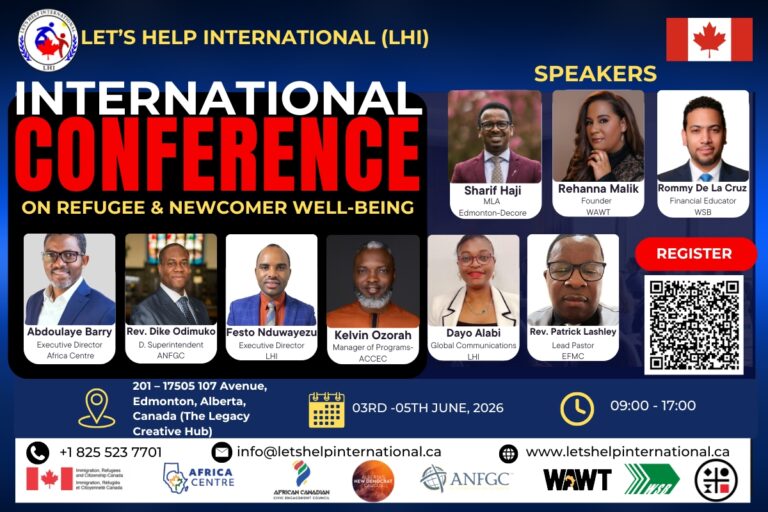
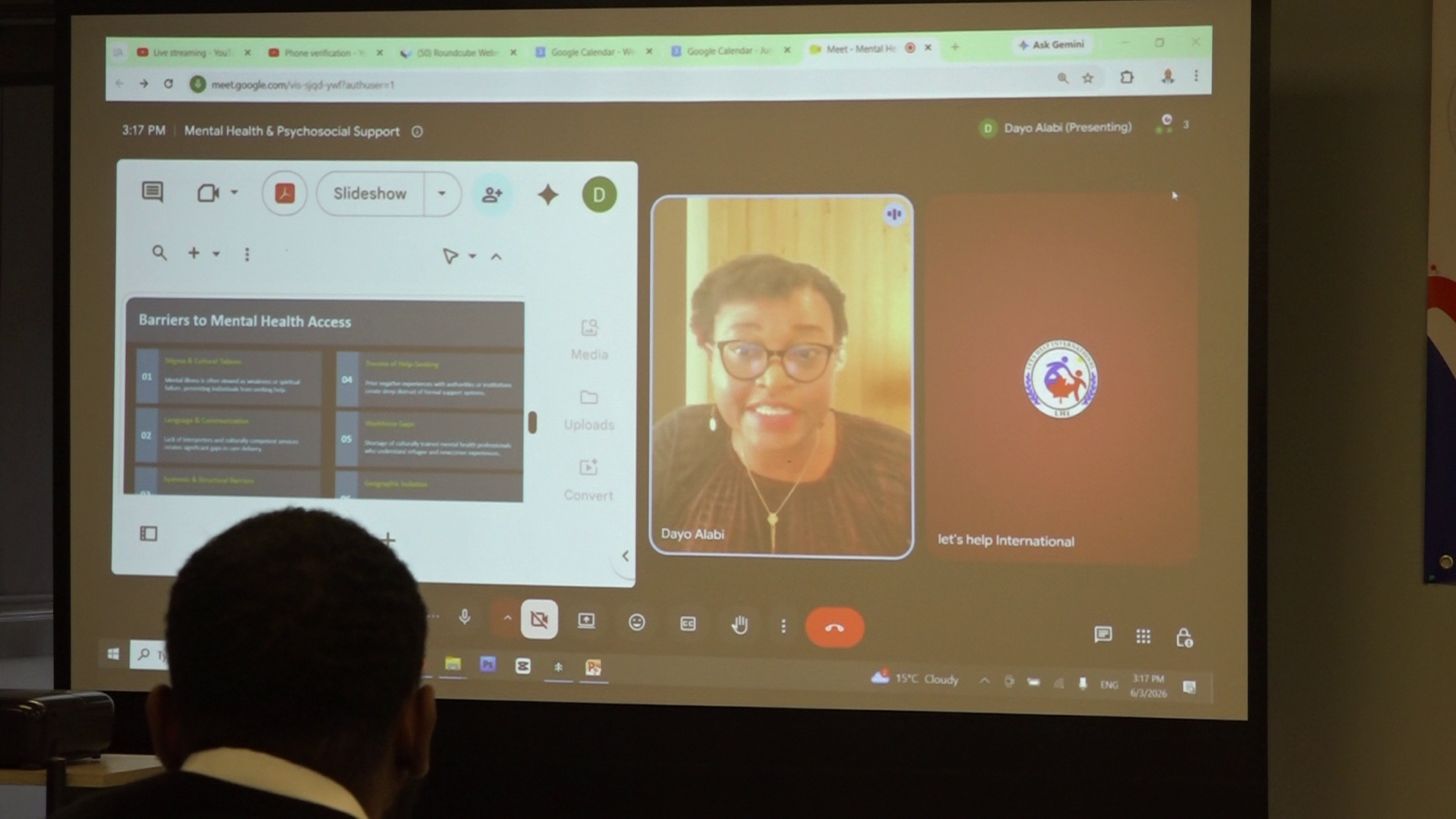
At the International Conference on Refugee & Newcomer Well-Being, organized by Let’s Help International (LHI), Ms. Dayo Alabi, Director of Global Communications and Advocacy at LHI, delivered a compelling presentation on the critical role of Mental Health and Psychosocial Support (MHPSS) in the successful integration and well-being of refugees and newcomers.
Opening her presentation with a powerful question: “When a refugee crosses a border, what do they carry with them?” Ms. Alabi challenged participants to look beyond physical belongings and recognize the invisible burdens many refugees carry: trauma, loss, uncertainty, and the hope for a better future. She emphasized that successful settlement extends beyond housing, employment, and education; it also requires healing, dignity, belonging, and emotional well-being.
Understanding the Mental Health Challenges Refugees Face
Ms. Alabi highlighted the numerous mental health challenges experienced by refugees and newcomers, many of whom have endured war, displacement, persecution, family separation, and difficult migration journeys. These experiences often result in trauma, anxiety, depression, and other psychosocial challenges that can hinder successful integration.
She stressed the importance of listening to refugee stories, as these narratives help organizations identify specific needs within families and communities. By understanding individual experiences, service providers can better connect people with appropriate support and resources.
Addressing Workforce Gaps in Mental Health Services
One of the key issues raised during the presentation was the shortage of culturally trained mental health professionals.
According to Ms. Alabi, refugees and newcomers come from diverse cultural backgrounds, languages, and lived experiences. Yet many mental health services lack professionals who understand these unique cultural contexts. This gap often creates barriers to accessing effective support and can leave vulnerable individuals without the care they need.
She called for increased investment in culturally competent mental health professionals who can provide services that are responsive to the traditions, languages, and experiences of diverse newcomer communities.
Geographic Isolation and Transportation Barriers
The presentation also addressed the challenges faced by refugees and newcomers living in rural or geographically isolated communities.
Limited transportation options often prevent individuals and families from accessing available services, including healthcare, counseling, employment support, and legal assistance. Ms. Alabi noted that transportation remains a critical factor in newcomer well-being and called upon community partners, donors, and stakeholders to help address these logistical barriers.
“Transportation is something that is very crucial to the survival of refugees and newcomers,” she emphasized, encouraging organizations and supporters to collaborate in creating solutions that improve access to essential services.
Recommendations for Building Stronger Support Systems
Ms. Alabi presented several recommendations to strengthen mental health and psychosocial support for refugees and newcomers:
Invest in Community-Led Approaches
She advocated for funding refugee-led and community-based initiatives that leverage cultural knowledge, lived experience, and trusted community networks to provide effective mental health support.
Train Culturally Competent Professionals
She called for mandatory cultural humility and trauma-informed training for frontline workers serving newcomer populations, ensuring services are inclusive and responsive to diverse needs.
Reduce Stigma Through Storytelling
Highlighting the power of communication and advocacy, Ms. Alabi encouraged the use of media, documentaries, social media campaigns, and community storytelling initiatives to normalize conversations about mental health and celebrate resilience.
Integrate Mental Health Into All Services
Rather than treating mental health as a separate issue, she recommended embedding mental health screening and support into housing, education, employment, legal aid, and settlement services.
Advocate for Policy Change and Sustainable Funding
She emphasized the need for dedicated funding allocations for refugee mental health programs and stronger policy commitments that prioritize psychosocial well-being as part of newcomer integration efforts.
The Power of Stories to Drive Change
A central theme of Ms. Alabi’s presentation was the importance of storytelling and advocacy.
“Stories are data with a soul,” she stated, explaining that every refugee narrative has the potential to influence policy, build empathy, mobilize resources, and inspire action.
Through strategic communications and community engagement, organizations can amplify refugee voices, challenge negative stereotypes, and hold institutions accountable for delivering on their commitments to refugee and newcomer well-being.
Ms. Alabi also highlighted LHI’s ongoing efforts to gather and share refugee stories through social media platforms, digital media, and community outreach initiatives. These stories help raise awareness, attract partners, and secure resources needed to support vulnerable populations.
A Call for Partnerships
During the question-and-answer session, participants asked how LHI collaborates with other organizations offering services such as legal aid and justice programs.
Ms. Alabi acknowledged that building partnerships is not always easy, particularly for a growing organization. However, she explained that LHI actively reaches out to nonprofits, community organizations, government agencies, and other stakeholders to create collaborative solutions for refugees and newcomers.
She invited organizations, donors, and community leaders to partner with LHI in expanding access to services, securing funding, and strengthening support systems for vulnerable populations.
Moving Beyond Awareness Into Action
In her closing remarks, Ms. Alabi delivered a powerful message that resonated throughout the conference.
“Every refugee and newcomer deserves more than safety. They deserve belonging. They deserve healing. They deserve hope.”
She challenged participants to move beyond awareness and into meaningful action by listening more deeply, advocating more boldly, collaborating more intentionally, and supporting more compassionately. Mental health, she reminded the audience, is not merely a healthcare issue, it is a human issue that affects individuals, families, and entire communities.
As the conference concluded, attendees were encouraged to become part of a movement that not only welcomes refugees across borders but also walks alongside them on their journey toward healing, belonging, and hope.
Through stronger partnerships, community-led solutions, culturally responsive services, and continued advocacy, a more inclusive and compassionate future for refugees and newcomers is possible.