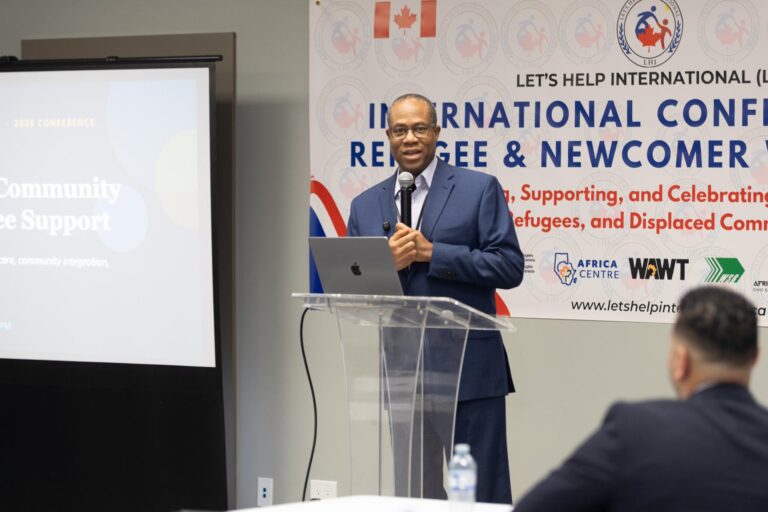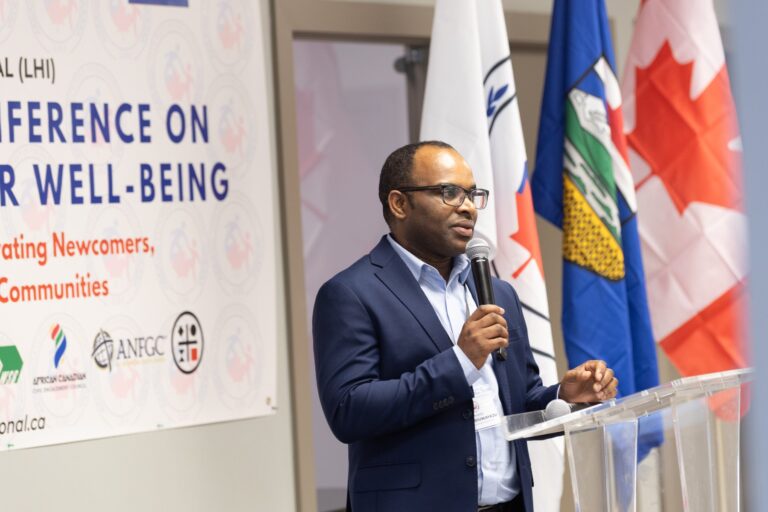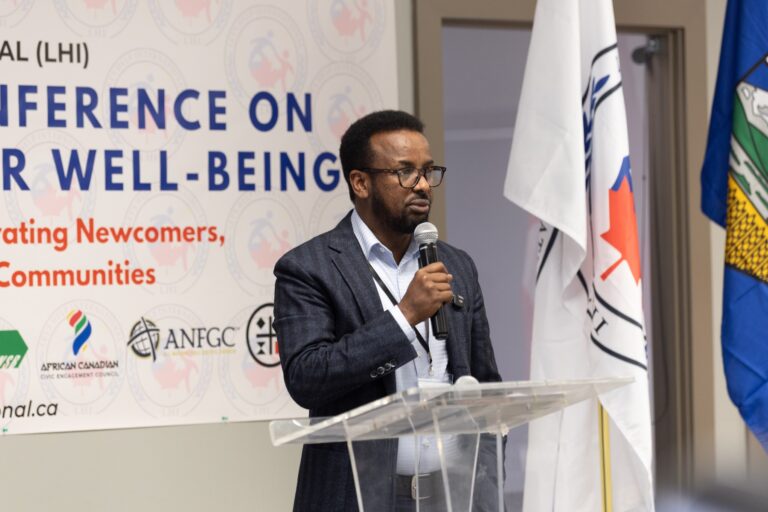
International Conference on Refugee and Newcomer Well-being – June 2026, Edmonton, Alberta, Canada.
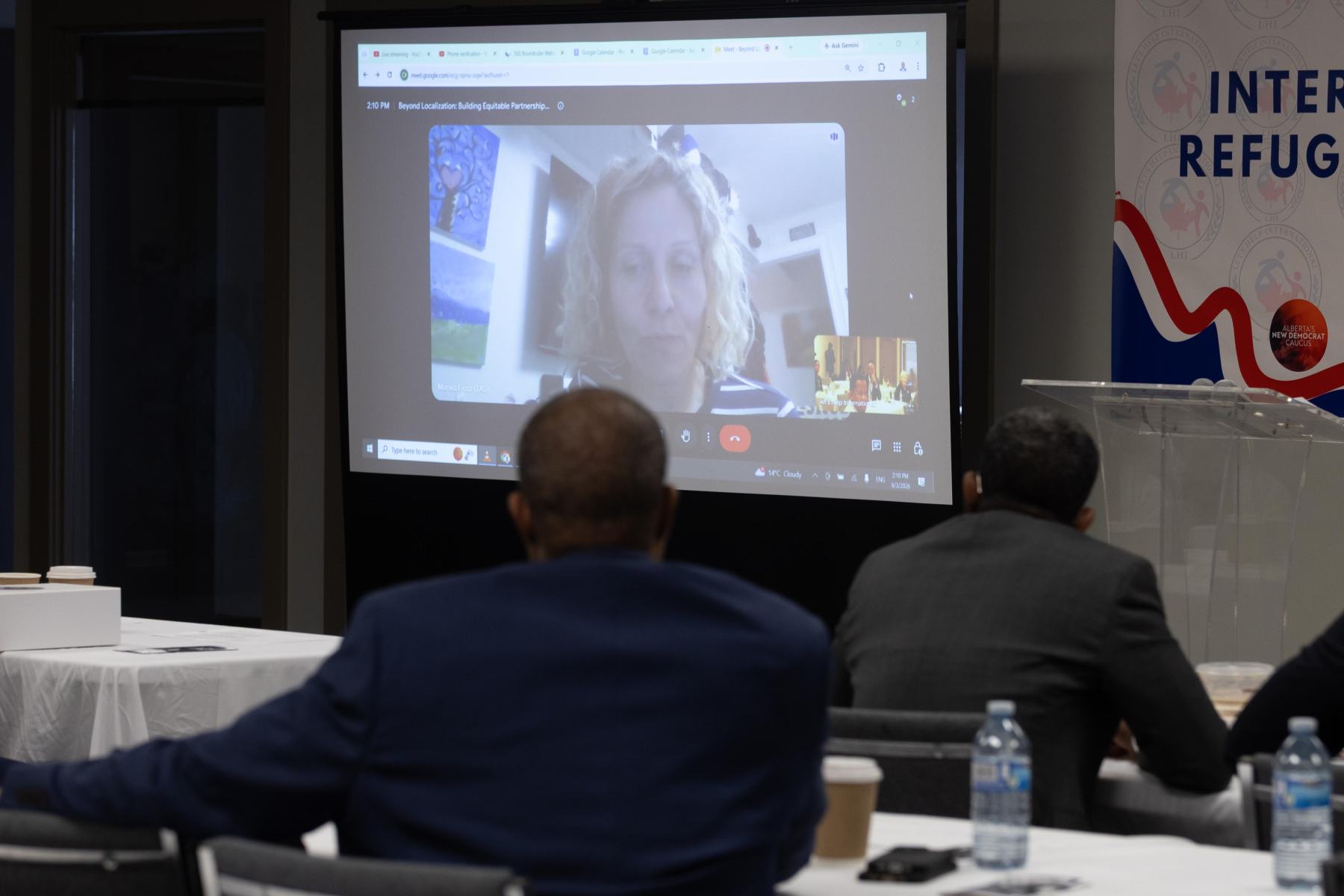
At the International Conference on Refugee and Newcomer Well-being, humanitarian leader Marwa Eissa, Director of Partnership Development and Management at Takaful Al Sham (TAS), delivered a compelling keynote address titled “Beyond Localization: Building Equitable Partnerships that Shift Power to Communities.”
Drawing from decades of experience working with governments, international organizations, and local humanitarian actors, Marwa challenged participants to rethink what localization truly means and why the humanitarian sector must move beyond rhetoric toward genuine power-sharing with affected communities.
Localization Is About More Than Funding
Marwa began by tracing the evolution of localization within the humanitarian system. Since the adoption of the Grand Bargain and commitments made at the World Humanitarian Summit in 2016, governments and humanitarian organizations have repeatedly pledged to increase support for local actors and place communities at the center of humanitarian response.
However, she highlighted a troubling reality: despite commitments that 25% of humanitarian funding would reach local organizations directly, the target has not been achieved. In recent humanitarian spending, only a small fraction of funding has gone directly to national and local organizations, while the majority continues to flow through international intermediaries.
For Marwa, this demonstrates a deeper issue.
“Localization is not about moving projects to local actors. It is about moving decision-making, leadership, and ownership closer to communities.”
She emphasized that many discussions focus on funding percentages, compliance systems, and partnership models, while overlooking the most important question:
Who makes the decisions that affect people’s lives?
Communities Are Often the First Responders
Reflecting on experiences from Syria and other crisis settings, Marwa noted that local communities are frequently the first responders during emergencies.
When earthquakes strike, conflicts erupt, or disasters unfold, community members are often the first to provide assistance and the last to leave. Yet despite their frontline role, they are frequently excluded from decisions about recovery, development, and long-term planning.
Local actors possess knowledge that cannot be replicated by external organizations. They understand local culture, traditions, social dynamics, and community priorities. They also remain present long after international organizations have departed.
“Only local actors truly understand their context, have community trust, and provide long-term continuity.”
The Missing Piece: Power
One of the strongest themes of Marwa’s keynote was the distinction between localizing implementation and localizing power.
While many local organizations have become responsible for implementing projects, strategic decisions are often still made elsewhere, in major international capitals, donor headquarters, and global coordination hubs.
According to Marwa, localization cannot succeed if local actors are simply contractors implementing someone else’s vision.
True localization requires transferring:
- Decision-making power
- Leadership authority
- Representation
- Accountability
- Knowledge ownership
- Influence over policies and priorities
“Localization is not simply transferring resources. It is transferring influence.”
Lessons from Syria
Marwa shared powerful examples from the Syrian humanitarian response, where local organizations evolved from service providers into strategic humanitarian actors.
Over years of conflict, Syrian organizations developed technical expertise, managed large-scale programs, led community engagement initiatives, and strengthened compliance systems. More importantly, they began advocating for a seat at decision-making tables traditionally dominated by international actors.
She described how Syrian civil society organizations united to demand meaningful participation in shaping humanitarian strategies and determining the future of their communities.
Their experience demonstrated that local organizations are fully capable of not only delivering aid but also influencing policy, guiding recovery efforts, and building sustainable solutions.
The Critical Role of Refugee-Led and Diaspora Organizations
A significant portion of Marwa’s presentation focused on refugee-led and diaspora organizations, particularly given the conference’s emphasis on refugees and newcomers.
She argued that refugee-led organizations bring invaluable assets to humanitarian work:
- Lived experience
- Community trust
- Cultural understanding
- Direct accountability
Diaspora organizations also contribute important strengths, including:
- Global networks
- Technical expertise
- Financial resources
- Advocacy influence
At the same time, she stressed the importance of accountability and ensuring that diaspora engagement remains aligned with the needs and aspirations of affected communities.
The goal, she explained, should be partnerships where refugee-led groups, diaspora organizations, national NGOs, and international actors work together as equals rather than within hierarchical structures.
Why People Leave Their Homes
One of the most moving moments of the keynote came when Marwa reflected on forced displacement.
She reminded participants that most refugees do not aspire to leave their countries, cultures, traditions, and families behind. Rather, they seek safety, dignity, and the opportunity to live peacefully in their own communities.
People are often forced to migrate because conflict, insecurity, and systemic barriers leave them with no other choice.
Her remarks reinforced the importance of supporting local leadership and community resilience so that people can build their futures where they feel most connected.
Five Recommendations for Equitable Partnerships
Marwa concluded her keynote with five practical recommendations for governments, donors, humanitarian organizations, and development actors seeking to create meaningful change:
1. Fund Relationships, Not Just Projects
Long-term partnerships require investment, trust, and mutual commitment beyond short project cycles.
2. Share Decision-Making
Local actors must be included from the beginning of planning processes, not consulted after decisions have already been made.
3. Invest in Local Leadership
Support should focus not only on organizational systems but also on developing community leaders and local institutions.
4. Share Risk Fairly
National organizations should not carry all implementation risks while international actors retain control over decisions and resources.
5. Measure Power Shifts
Success should be evaluated not only through project outputs but also by assessing whether decision-making authority is genuinely moving closer to communities.
Communities Are the Authors of Change
In her closing reflections, Marwa offered a powerful challenge to the humanitarian sector.
Localization, she argued, is not a destination but an ongoing process of shifting trust, ownership, and leadership toward communities.
The question is no longer whether local actors can lead. Their capabilities have already been demonstrated repeatedly around the world.
The real question is whether the humanitarian system is ready to allow them to lead.
Her final message resonated strongly with conference participants:
“Communities are not beneficiaries of change. They are the authors of it.”
As refugee and newcomer communities continue to shape responses to displacement, integration, and recovery worldwide, Marwa’s call for equitable partnerships serves as a reminder that sustainable change is not built for communities, it is built by communities themselves.