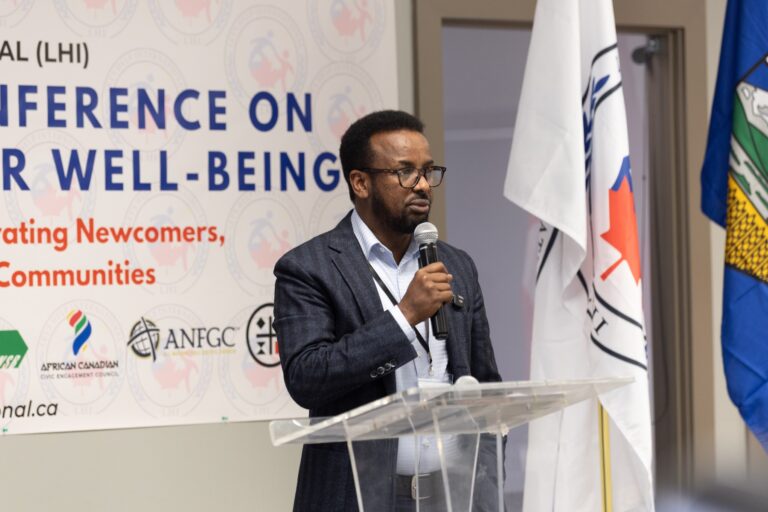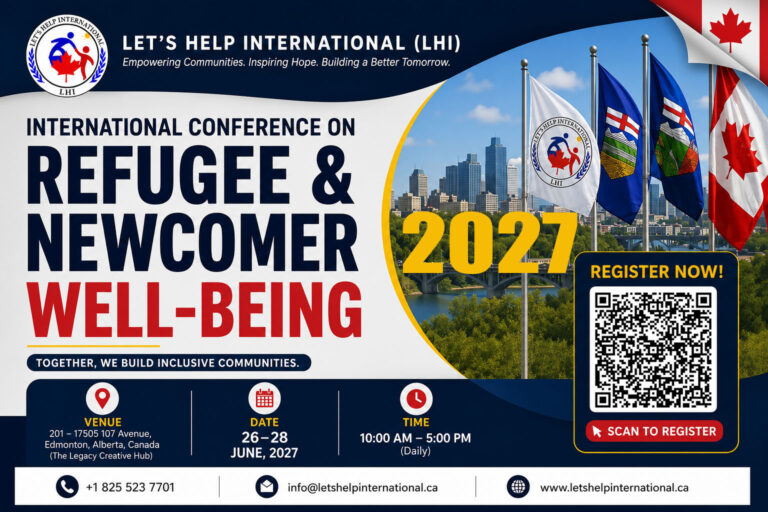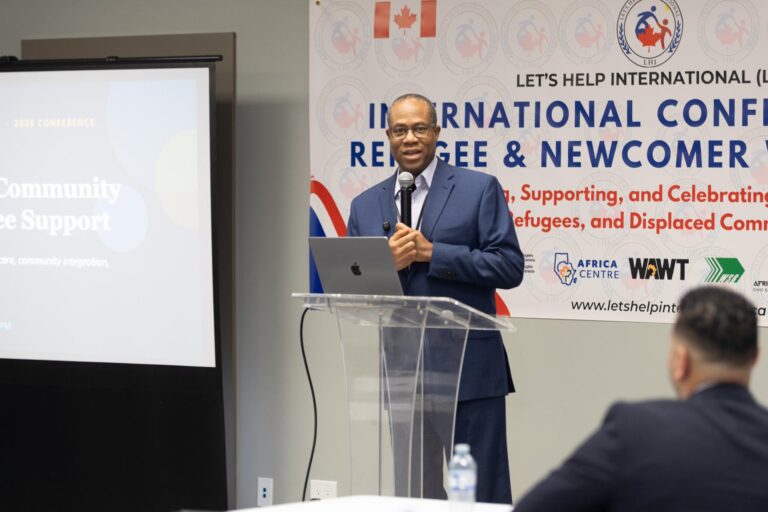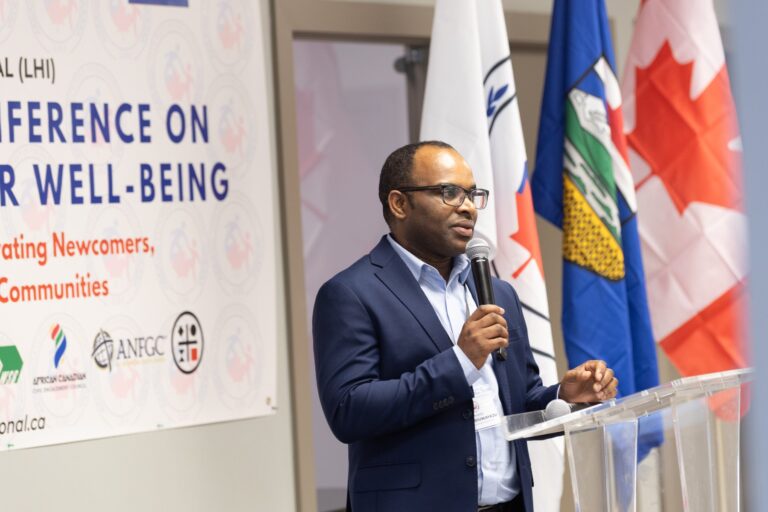
Sustainable integration begins when communities create opportunities for one another, rather than waiting for opportunities to come from outside. This was the central message delivered by Mr. Kelvin Ozorah, Manager of Programs – Youth Development at the African Canadian Civic Engagement Council (ACCEC), during his presentation on “Integration, Employment & Social Participation” at the International Conference on Refugee & Newcomer Well-Being, organized by Let’s Help International (LHI) in Edmonton, Alberta. The conference brought together government representatives, nonprofit leaders, refugee-led organizations, faith leaders, researchers, employers, and community advocates to explore practical solutions for improving the well-being of refugees and newcomers under the theme, “Seeing, Supporting, and Celebrating Newcomers, Refugees, and Displaced Communities.”
Rather than delivering a conventional employment presentation, Mr. Ozorah adapted his remarks after recognizing that many participants were organizational leaders with the capacity to influence change. He challenged the audience to think beyond helping individuals secure jobs and instead focus on building stronger communities that generate opportunities for others.
Investing in People Creates Lasting Impact
Drawing from his experience leading youth employment and entrepreneurship programs at ACCEC, Mr. Ozorah shared how investing in young people has produced long-term benefits for entire communities.
He explained that through entrepreneurship programs he has helped more than 75 young people develop business skills, with approximately 55 successfully launching their own businesses. Many of these businesses have gone on to employ other newcomers, demonstrating how supporting one entrepreneur can create opportunities for many others.
To illustrate this impact, he shared the story of a young refugee who arrived in Canada without parents and participated in ACCEC’s entrepreneurship program. Today, the young man operates a successful photography business and regularly provides professional services at community events across Edmonton.
“This is what community impact looks like,” Mr. Ozorah explained. “When you work for your community, you also benefit from that community.”
Entrepreneurship as a Tool for Integration
Mr. Ozorah emphasized that employment programs should not only measure success by the number of participants placed into jobs but also by their ability to build sustainable careers and businesses.
He recounted a youth employment initiative where finding employers willing to hire participants proved challenging. Instead of relying exclusively on external employers, ACCEC partnered with entrepreneurs who had previously graduated from its own business development programs.
Those businesses subsequently hired many participants from the employment program, creating a cycle of economic empowerment where former beneficiaries became employers themselves.
The experience demonstrated that community-led entrepreneurship can become one of the most effective pathways toward newcomer integration, financial independence, and long-term social participation.
Beyond Job Applications: The Importance of Community Engagement
Recognizing the increasingly competitive Canadian labour market, Mr. Ozorah acknowledged that many newcomers face significant challenges, including language barriers, lack of Canadian work experience, and increased competition for entry-level positions.
He encouraged newcomers not to spend all of their time submitting online job applications but instead to become active members of their communities through volunteering.
According to Mr. Ozorah, volunteering helps newcomers gain valuable Canadian experience, expand professional networks, build confidence, and increase their visibility to potential employers while making meaningful contributions to their communities.
Building Solutions Alongside Advocacy
Mr. Ozorah also addressed conversations around racism and systemic barriers, acknowledging that discrimination continues to affect many newcomers. However, he encouraged community organizations to balance advocacy with practical action.
He emphasized that while it is important to speak out against injustice, organizations should also focus on strengthening community capacity, supporting local businesses, mentoring young entrepreneurs, and creating employment opportunities that reduce barriers over time.
His message encouraged leaders to become solution builders—working together to address challenges while creating sustainable pathways for future generations.
Partnership as the Foundation for Success
During the interactive discussion, participants explored opportunities for collaboration between ACCEC and organizations serving refugee and newcomer communities.
Mr. Ozorah explained that ACCEC supports organizations through leadership development, organizational capacity building, entrepreneurship training, employment programming, referrals, and strategic partnerships.
He noted that no single organization can meet every need facing newcomers, making collaboration essential to building stronger, more inclusive communities.
Advancing LHI’s Vision for Inclusive Communities
Mr. Ozorah’s presentation strongly reflected the mission of Let’s Help International to empower refugees and newcomers through collaboration, capacity building, and community-led solutions.
His call for organizations to invest in people, strengthen local leadership, and create opportunities from within reinforced one of the conference’s key messages: lasting integration is achieved when communities move beyond providing services to empowering individuals to become leaders, entrepreneurs, employers, and active contributors to society.
As participants left the session, they were reminded that every investment in one person has the potential to transform an entire community, and that meaningful integration is built not only through employment, but through leadership, partnership, and shared responsibility.