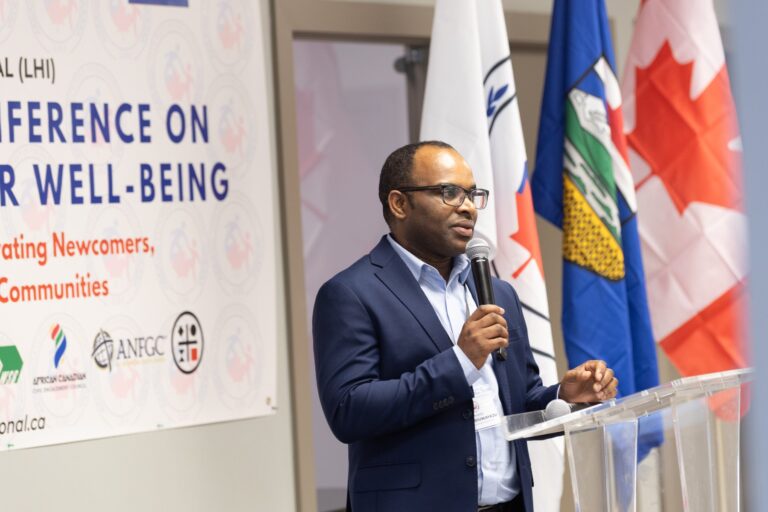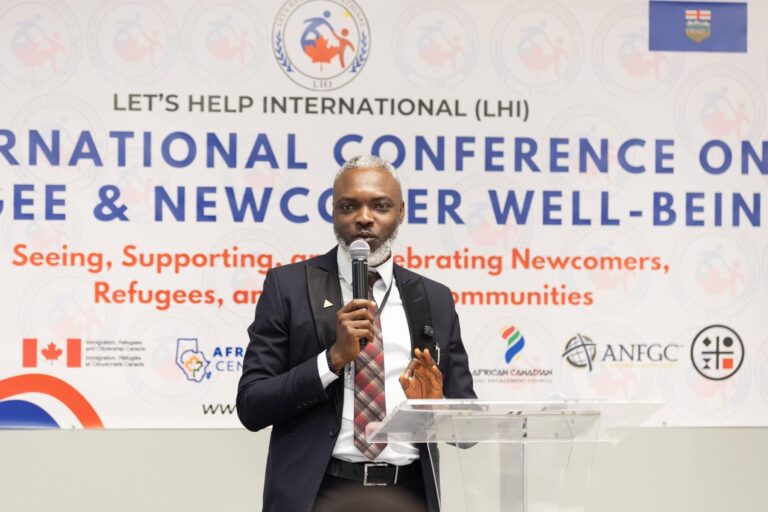
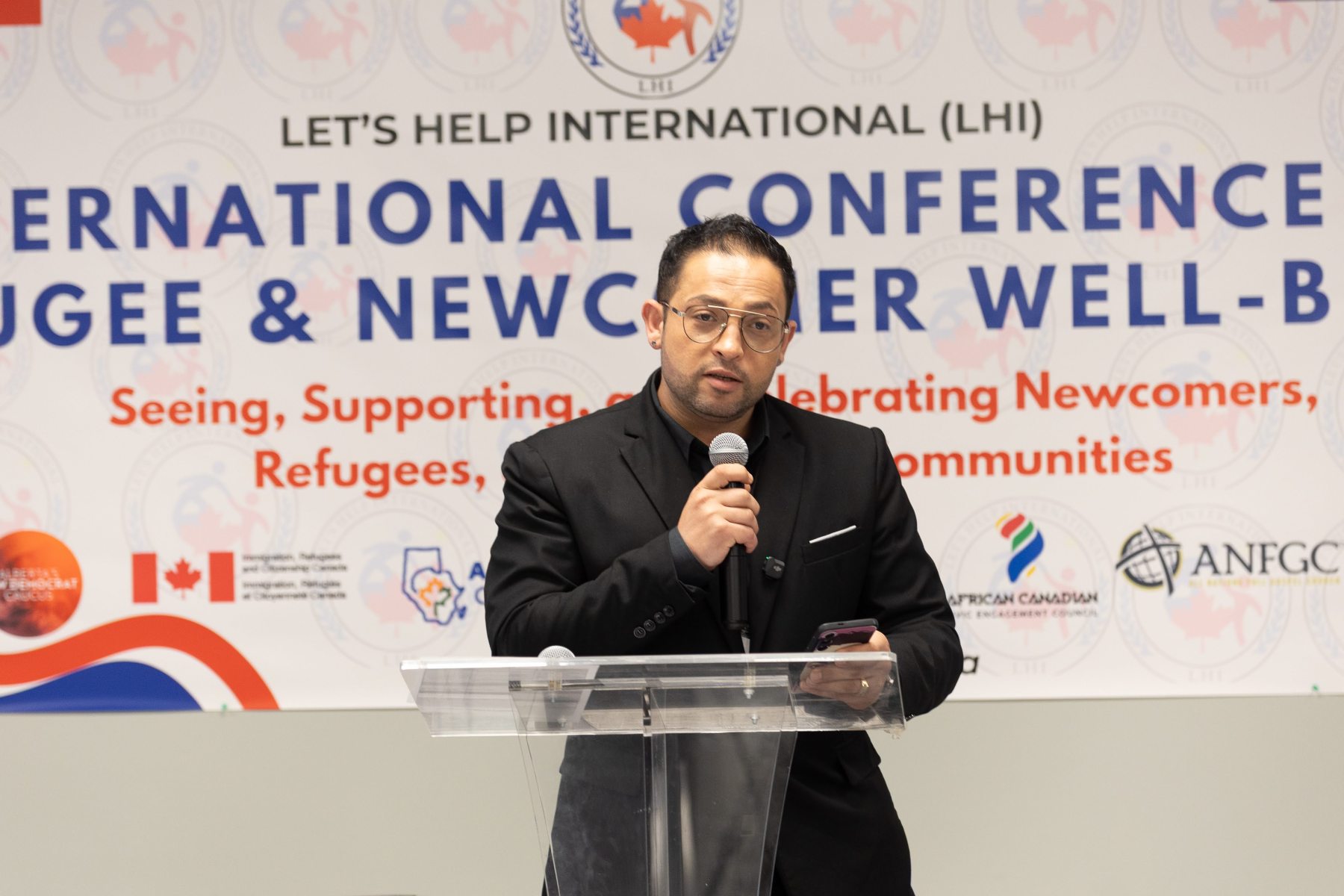
Speech – Mr. Basel Abou Hamrah, Vice President of the Canadian Council for Refugees
At the International Conference on Refugee and Newcomer Well-Being , one of the most thought-provoking messages came from Mr. Basel Abou Hamrah, Vice President of the Canadian Council for Refugees. His keynote challenged conventional thinking about refugees, not as passive recipients of support, but as active holders of knowledge, resilience, and leadership capacity that societies urgently need today.
Reframing the Narrative: From “Problem” to “Solution”
Mr. Abou Hamrah opened his address with a powerful reframing of the global refugee discourse:
Refugees are not the world’s biggest challenge. Refugees are one of the world’s most overlooked solutions.
He emphasized that global conversations too often focus on refugees through the lens of need—protection, settlement, and integration—while overlooking their lived expertise. According to him, this limited framing misses a critical truth: refugees carry deep knowledge about adaptation, resilience, and rebuilding lives under pressure.
In a world marked by climate shocks, conflict, migration, and rapid technological change, he argued that adaptability is one of the most valuable leadership skills—and refugees embody it daily.
The Paradox of Refugee Leadership
A central theme of the speech was what Mr. Abou Hamrah called a “paradox of exclusion.” He noted that the same individuals who have mastered survival, cultural navigation, and rebuilding communities are often excluded from shaping the systems that govern migration and integration.
He pointed out:
- People who survive crises and rebuild businesses are called leaders
- Those who overcome adversity are called innovators
- Those who navigate multiple cultures are called globally competent
- Yet refugees with the same abilities are often labeled as “vulnerable”
This contradiction, he argued, reflects a systemic undervaluing of lived experience as a form of expertise.
Refugee Leadership in Action
Drawing from lived and observed experiences, Mr. Abou Hamrah highlighted the everyday leadership already demonstrated within refugee communities:
- Parents rebuilding family life in new languages and cultures
- Youth acting as bridges between generations
- Entrepreneurs launching businesses in unfamiliar environments
- Community leaders organizing support networks faster than formal systems
- Individuals identifying community needs before institutions respond
These examples, he stressed, are not theoretical—they are real-world demonstrations of leadership forged through adversity.
A Shift From Participation to Power
One of the most striking arguments in the speech was the distinction between participation and power.
Mr. Abou Hamrah observed that refugee communities are often invited to:
- Share their stories
- Participate in consultations
- Validate pre-made decisions
However, they are rarely granted actual decision-making authority.
He challenged institutions to move beyond symbolic inclusion toward meaningful power-sharing:
Representation without power is symbolism. Leadership requires influence.
This shift, he argued, is what true refugee leadership demands—not consultation, but co-governance.
Redefining Systems, Not Just Supporting Individuals
A key message of the speech was that refugee leadership should not be about helping individuals fit into existing systems, but about transforming those systems themselves.
He proposed a new institutional mindset:
- Treat refugee leaders as strategic partners, not advisors
- Fund leadership development, not only service delivery
- Create pathways into policymaking, governance, and public leadership
- Invest in refugee-led organizations for their expertise, not just their identity
- Measure success not by “how many are served,” but by “how many are leading”
This redefinition shifts the conversation from integration alone to institutional evolution.
A Democracy Issue, Not Just a Refugee Issue
Perhaps the most powerful reflection of the speech was its broader democratic framing. Mr. Abou Hamrah argued that refugee leadership is not only a refugee issue—it is a democracy issue.
He stated that democratic systems are strongest when those most affected by decisions are empowered to shape them. Conversely, democracy weakens when lived experience is excluded from decision-making processes.
In his words, refugee leadership challenges societies to expand their understanding of expertise beyond credentials and formal authority, to include lived experience, resilience, and survival knowledge.
Conclusion: A Call to Action
Mr. Basel Abou Hamrah concluded with a clear challenge to institutions, funders, and policymakers:
Refugee leaders are already ready. The question is whether systems are ready to share power.
His message invites a fundamental shift in how societies understand leadership, expertise, and inclusion. Rather than viewing refugees as passive beneficiaries of support, he calls for recognizing them as co-authors of the future—capable of shaping policies, strengthening institutions, and driving innovation.
As discussions continue from the International Conference on Refugee and Newcomer Well-Being, this speech stands out as a powerful reminder: the future of inclusion is not just about welcoming people in—it is about inviting them to lead.