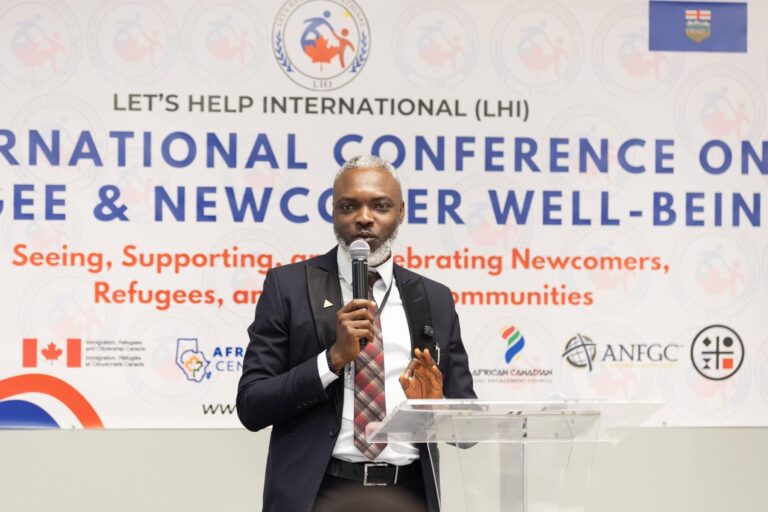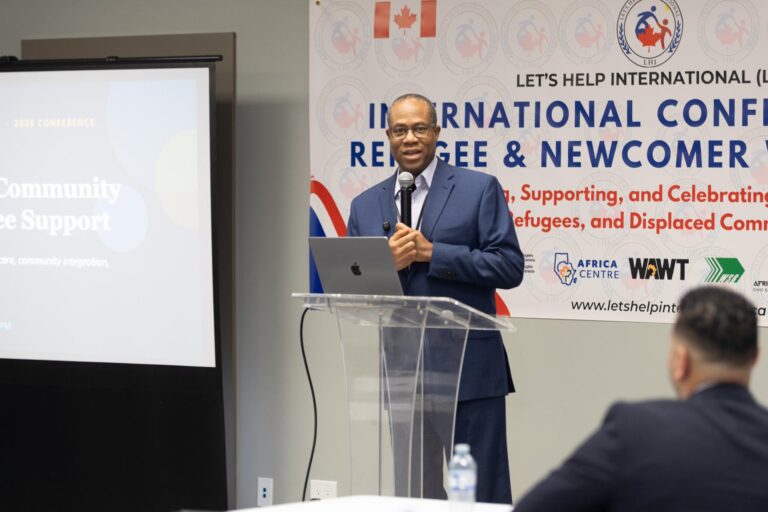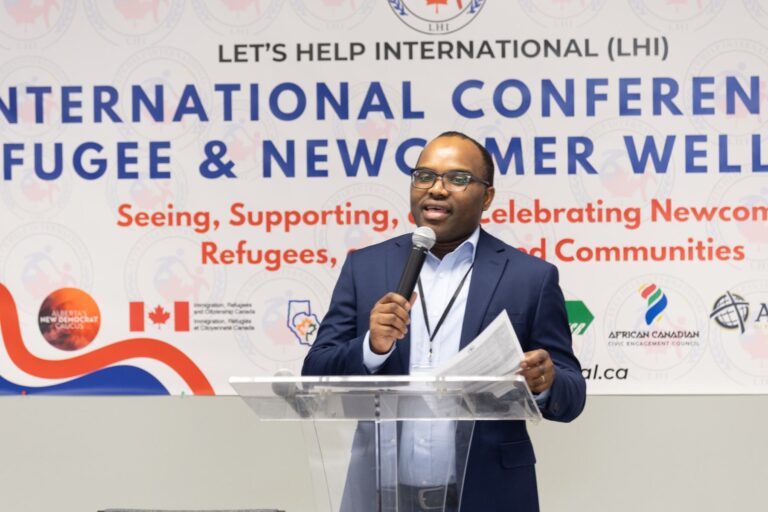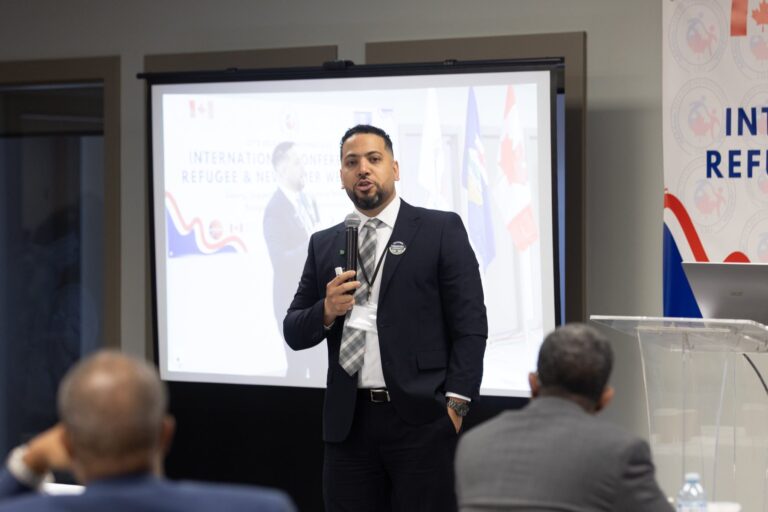
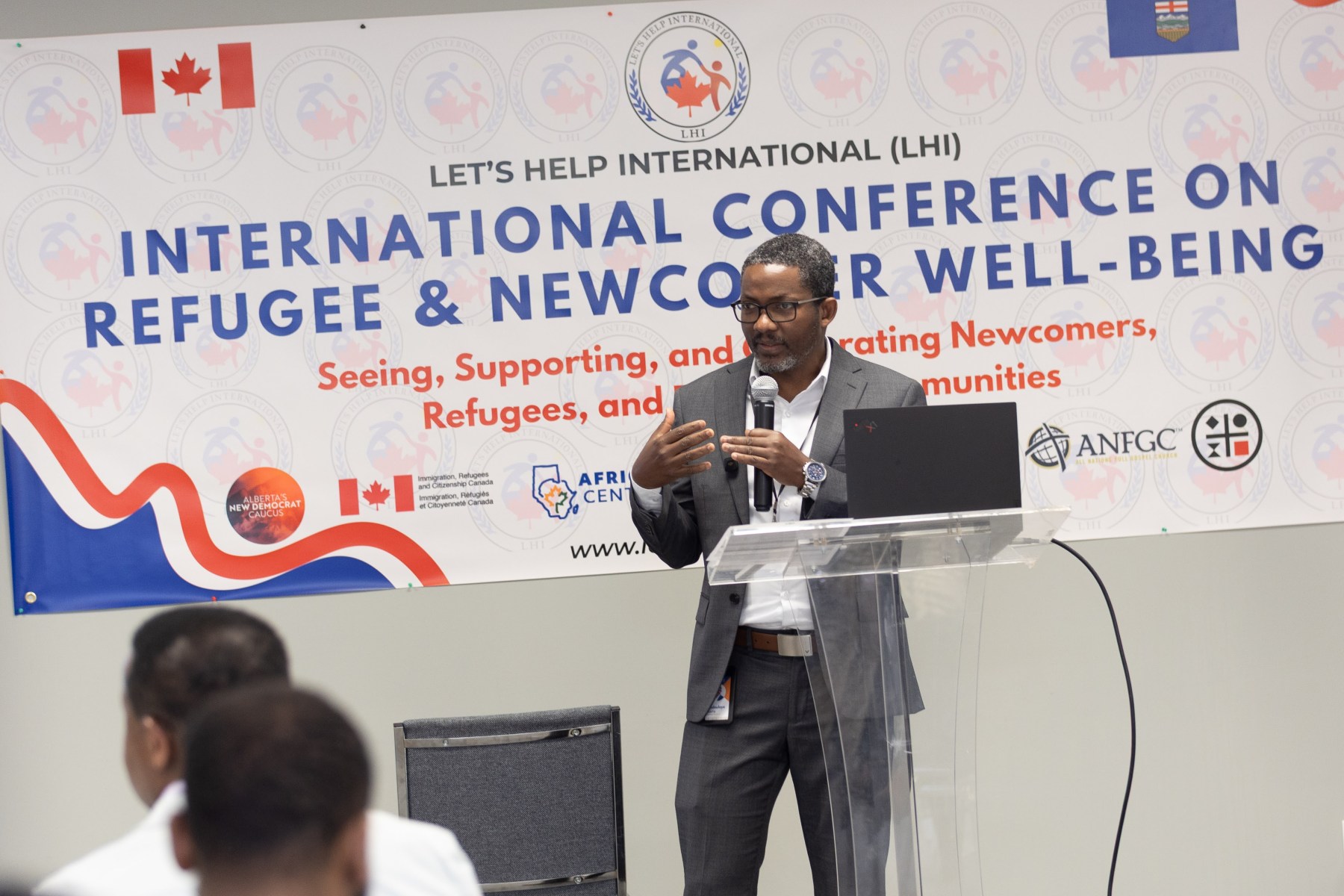
International Conference on Refugee & Newcomer Well-Being 2026, Edmonton, Alberta, Canada.
At the International Conference on Refugee & Newcomer Well-Being 2026, Mr. Abdoulaye Barry, Executive Director of the Africa Centre, delivered a powerful keynote address on the realities facing refugees and newcomers in Canada. Drawing from years of experience serving African, Afro-Caribbean, and Black communities across Western Canada, Barry highlighted both the challenges newcomers encounter and the opportunities that exist to build a more inclusive and prosperous society.
Understanding Well-Being Beyond Basic Needs
Barry emphasized that newcomer well-being extends far beyond access to housing, healthcare, and employment. True well-being requires both foundational support and empowerment.
At the foundational level, newcomers need culturally safe environments, accessible services, language support, and resources that help them navigate settlement challenges. At the empowerment level, newcomers must be recognized for their skills, experience, and cultural identities, allowing them to contribute meaningfully to Canadian society.
“People thrive when they move from being passive recipients of services to active contributors in their communities,” Barry explained.
The Hidden Challenges Behind Immigration
While Canada remains a destination of hope for many people around the world, Barry noted that the realities newcomers face are often more difficult than expected.
He cited research showing significant mental health challenges among racialized newcomers, driven by factors such as:
- Social isolation
- Underemployment
- Language barriers
- Difficulty navigating institutions and services
- Separation from family and support networks
Many newcomers arrive highly educated and professionally experienced, yet struggle to have their credentials recognized. According to the data presented, internationally educated newcomers continue to face significant wage gaps compared to Canadian-born workers.
“This lack of recognition affects more than employment,” Barry said. “It affects dignity, confidence, and a person’s belief that they can contribute to society.”
The Five-Year Settlement Journey
One of the most compelling parts of Barry’s presentation was his explanation of the newcomer settlement journey.
He described an initial “honeymoon phase” during the first months after arrival, when optimism and excitement are high. However, as months turn into years, many newcomers encounter mounting pressures—difficulty finding suitable employment, financial obligations, language barriers, and the challenge of adapting to a new culture.
For some, it can take five years or more before they are able to work in their professional field or achieve the goals that motivated them to immigrate.
Drawing on his own experience, Barry shared how language barriers and credential recognition challenges delayed his own career advancement after arriving in Canada.
The Settlement Paradox
Barry also highlighted what he called the “settlement paradox.”
While Canada offers numerous settlement programs and services, many are designed using a one-size-fits-all approach that fails to account for the unique realities of diverse newcomer populations.
Programs that work for one group may not adequately address the needs of others, particularly newcomers facing multiple barriers such as language challenges, cultural differences, and systemic discrimination.
He argued that culturally responsive programming and community-led solutions are essential to improving newcomer outcomes.
Unlocking Newcomer Potential for Canada’s Future
Rather than viewing newcomers solely as beneficiaries of support, Barry encouraged policymakers, businesses, and communities to recognize them as valuable assets.
Canada welcomes some of the world’s most educated immigrants and skilled refugees. Their international experience, professional expertise, and cultural knowledge represent significant opportunities for economic growth, entrepreneurship, and international trade.
Barry suggested that Canada could strengthen its economic resilience by creating better pathways for credential recognition and by supporting newcomers in building connections between Canadian businesses and global markets.
“Recognition is not just good for newcomers,” he said. “It is good for Canada.”
Community-Based Solutions in Action
Barry shared how the Africa Centre has responded to these realities through holistic programming that supports children, youth, adults, families, entrepreneurs, and seniors.
These initiatives include:
- Culturally responsive childcare and youth development programs
- Academic support and mentorship opportunities
- Entrepreneurship training and business development support
- Community capacity-building initiatives
- Senior engagement and social inclusion programs
- Digital literacy and technology training
One inspiring example involved seniors participating in digital literacy classes, where one participant successfully used artificial intelligence tools to write an entire book.
These programs demonstrate the power of community-led approaches that respect cultural identity while supporting integration into Canadian society.
Lessons from Lived Experience
During the discussion period, participants shared practical advice for newcomers navigating their first years in Canada.
Several key themes emerged:
Think Long-Term
Newcomer success is a marathon, not a sprint. Managing expectations and understanding that settlement takes time can help reduce frustration and disappointment.
Build Financial Literacy
Effective financial planning can help newcomers navigate the challenging period between arrival and stable employment.
Find Community
Strong social networks provide emotional support, guidance, and hope during difficult transitions. Community remains one of the most powerful protective factors for newcomer well-being.
A Call to Action
Barry concluded by urging governments, service providers, researchers, and community organizations to work together to create systems that recognize newcomers’ strengths rather than focusing solely on their needs.
His message was clear: newcomer well-being is not achieved simply by helping people survive. It is achieved by creating opportunities for them to belong, contribute, and thrive.
As Canada continues to welcome refugees and immigrants from around the world, the challenge before us is not only to provide services but also to build communities where every newcomer is seen, supported, recognized, and celebrated.
When newcomers succeed, Canada succeeds.