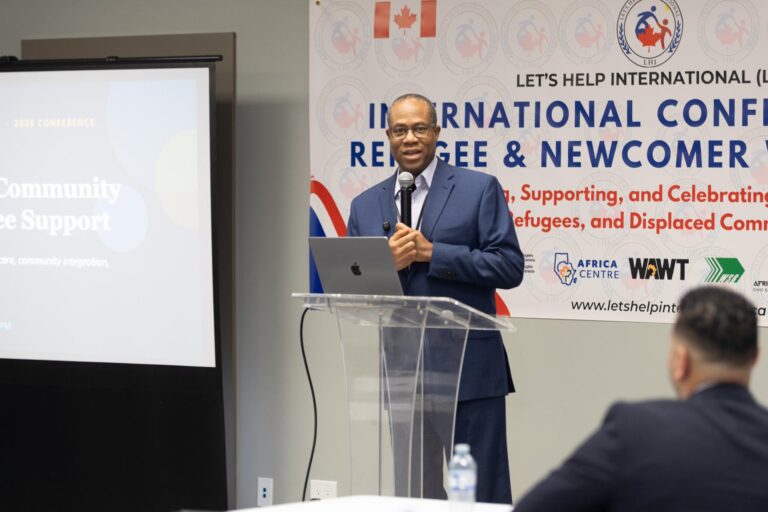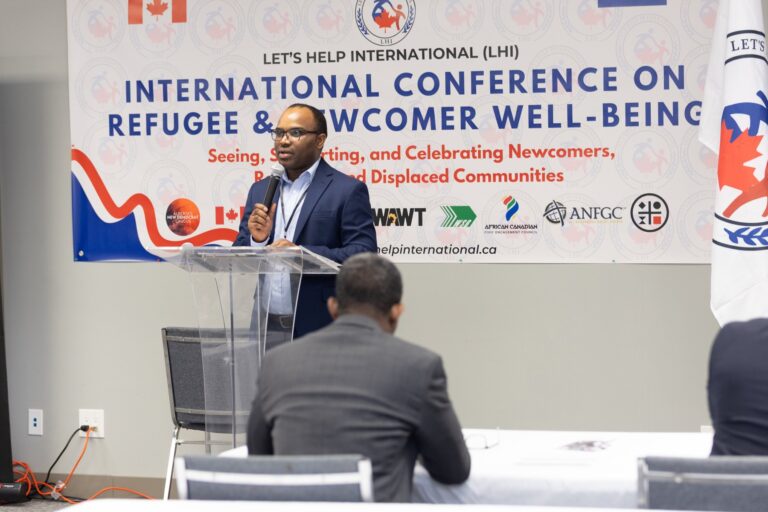
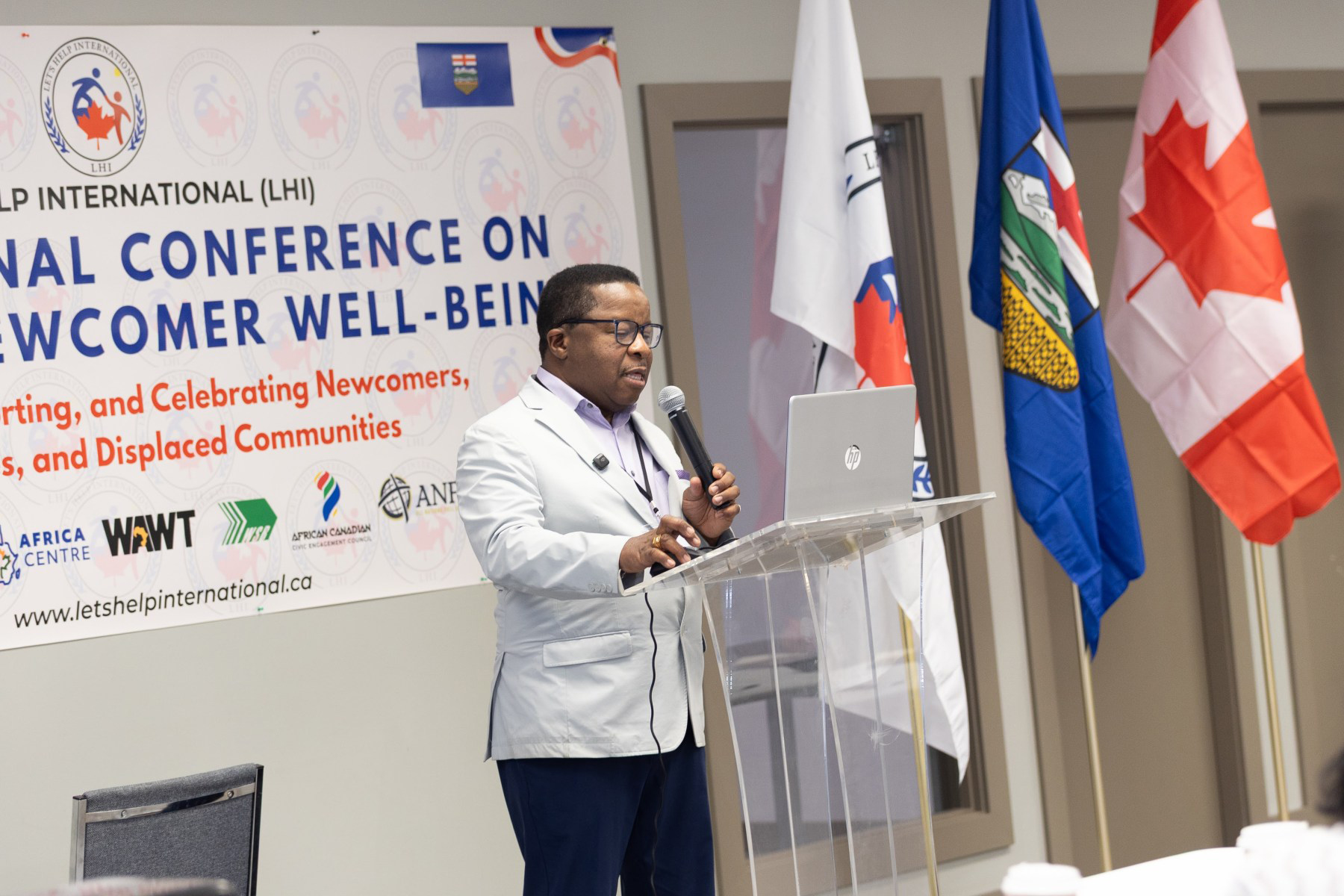
At the International Conference on Refugee & Newcomer Well-Being 2026, held in Edmonton, Alberta, Rev. Patrick Lashley, Retired Lead Pastor of Edmonton Free Methodist Church, delivered a compelling presentation titled “Seeing, Supporting, and Celebrating Newcomers in a Changing World.” His message challenged participants to move beyond awareness and toward meaningful action in creating communities where newcomers and refugees can truly belong.
Understanding the Reality Facing Newcomers
Rev. Lashley began by inviting attendees to reflect on several important questions: How are newcomers and refugees doing in Canada today? What challenges are they facing? How can communities respond? And what does true belonging look like?
He emphasized that these questions are increasingly important in a world experiencing unprecedented displacement. With more than 120 million people forcibly displaced worldwide, he reminded participants that behind every statistic is a human story filled with courage, loss, resilience, and hope.
Canada’s Growing Diversity
Canada continues to be shaped by immigration. Rev. Lashley highlighted that immigrants now make up approximately 23% of Canada’s population, with international migration accounting for the vast majority of population growth. Nearly 686,000 newcomers accessed settlement services in recent years, demonstrating both the opportunities and the support needs that accompany migration.
Closer to home, Alberta has surpassed five million residents and remains one of Canada’s fastest-growing provinces. Much of the province’s future growth is expected to come from international migration, making newcomer inclusion an essential priority for communities, organizations, and governments alike.
Recognizing the Challenges
While Canada offers numerous supports for newcomers—including settlement services, language training, employment assistance, healthcare access, refugee resettlement programs, and community sponsorship initiatives—many barriers remain.
Rev. Lashley outlined several challenges commonly experienced by newcomers:
- Housing affordability and availability
- Employment barriers and difficulties with credential recognition
- Social isolation and limited community connections
- Experiences of discrimination and racism
- Mental health pressures related to adaptation and resettlement
These challenges can significantly affect a newcomer’s ability to thrive and fully participate in Canadian society.
Building Inclusive Communities Through Accommodation
A key theme of the presentation was the importance of reasonable accommodation and inclusion. Rev. Lashley explained that creating equitable opportunities often requires removing barriers that prevent full participation.
Examples of practical accommodations include:
- Translation and interpretation services
- Plain-language communication
- Additional time during training and onboarding processes
- Multilingual signage and documents
- Culturally responsive service delivery
- Flexible employment supports for language learners
The goal, he noted, is not simply to welcome newcomers but to ensure they can fully engage, contribute, and succeed.
Listening to Newcomers’ Voices
Rev. Lashley also shared common experiences reported by newcomers themselves. Many face difficulties finding affordable housing, encounter challenges having their professional qualifications recognized, and struggle to build meaningful social connections. At the same time, newcomers consistently express a strong desire to contribute to their communities and develop a sense of belonging.
Their voices remind us that integration is not only about services—it is about relationships, opportunity, and inclusion.
Solutions for a Stronger Future
Addressing newcomer challenges requires collaboration across sectors. Rev. Lashley identified several priorities for governments and organizations:
- Expanding affordable housing options
- Improving credential recognition processes
- Increasing access to language training programs
- Strengthening mental health supports
- Enhancing settlement service funding
- Promoting anti-racism initiatives and inclusive practices
These investments not only benefit newcomers but also strengthen communities and contribute to Canada’s long-term prosperity.
Everyone Has a Role to Play
One of the most powerful messages of the presentation was that creating belonging is everyone’s responsibility. Faith communities, employers, schools, nonprofit organizations, community groups, and individual citizens all have an important role in welcoming newcomers and helping them succeed.
Building inclusive communities requires intentional action, empathy, and a willingness to learn from one another. When newcomers are supported, entire communities benefit from their talents, perspectives, and contributions.
A Call to Action
Rev. Patrick Lashley concluded with a simple yet powerful call to action:
See newcomers with dignity. Support them with compassion. Celebrate their contributions. Create communities where everyone belongs.
As Canada continues to welcome people from around the world, this message resonates more strongly than ever. The future of refugee and newcomer well-being depends not only on policies and programs but also on the choices we make as individuals and communities.
The International Conference on Refugee & Newcomer Well-Being 2026 served as a reminder that inclusion is more than a goal—it is a shared responsibility. By seeing, supporting, and celebrating newcomers, we can build stronger, more connected, and more welcoming communities for all.