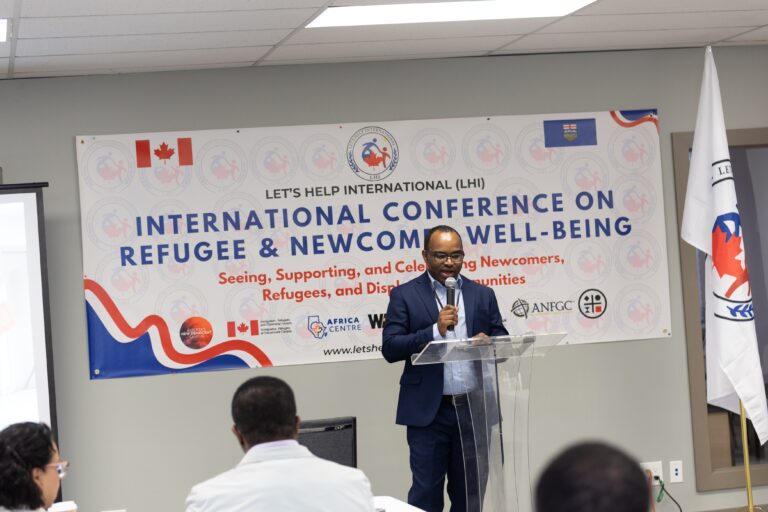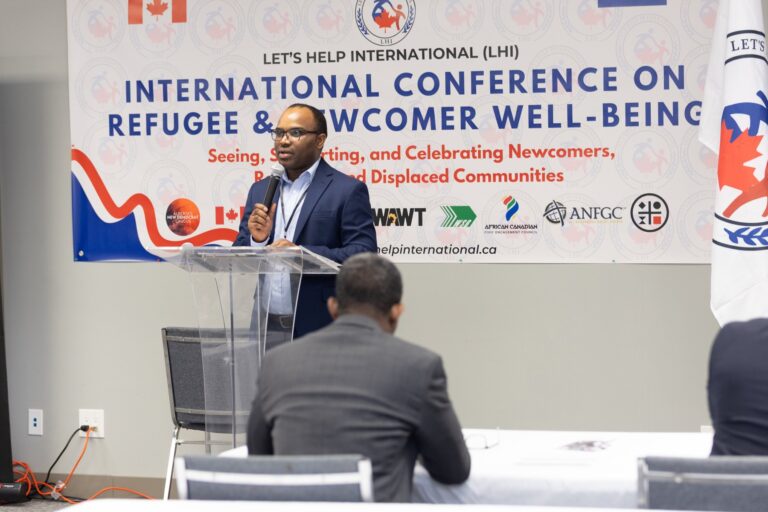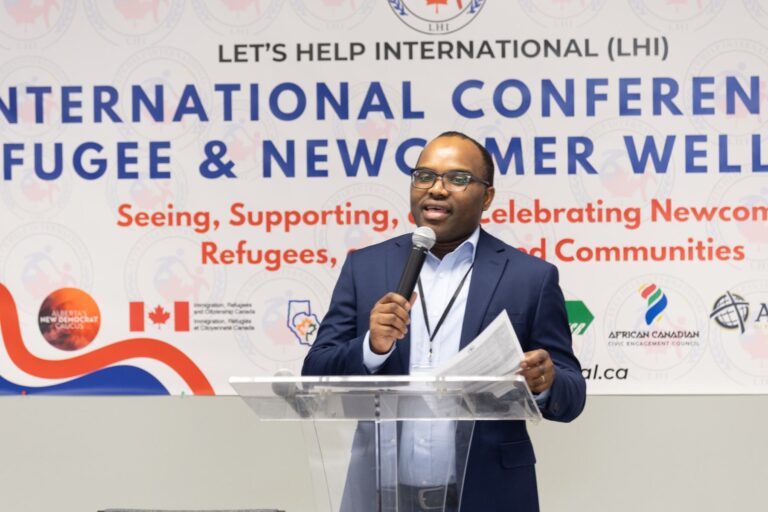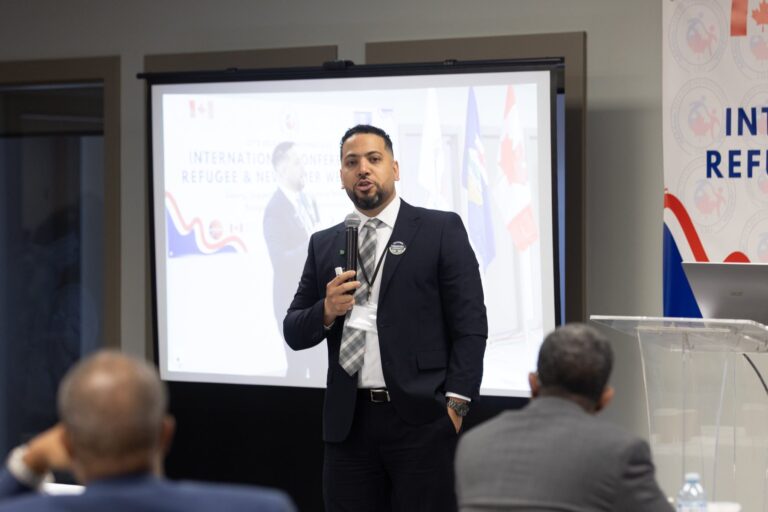
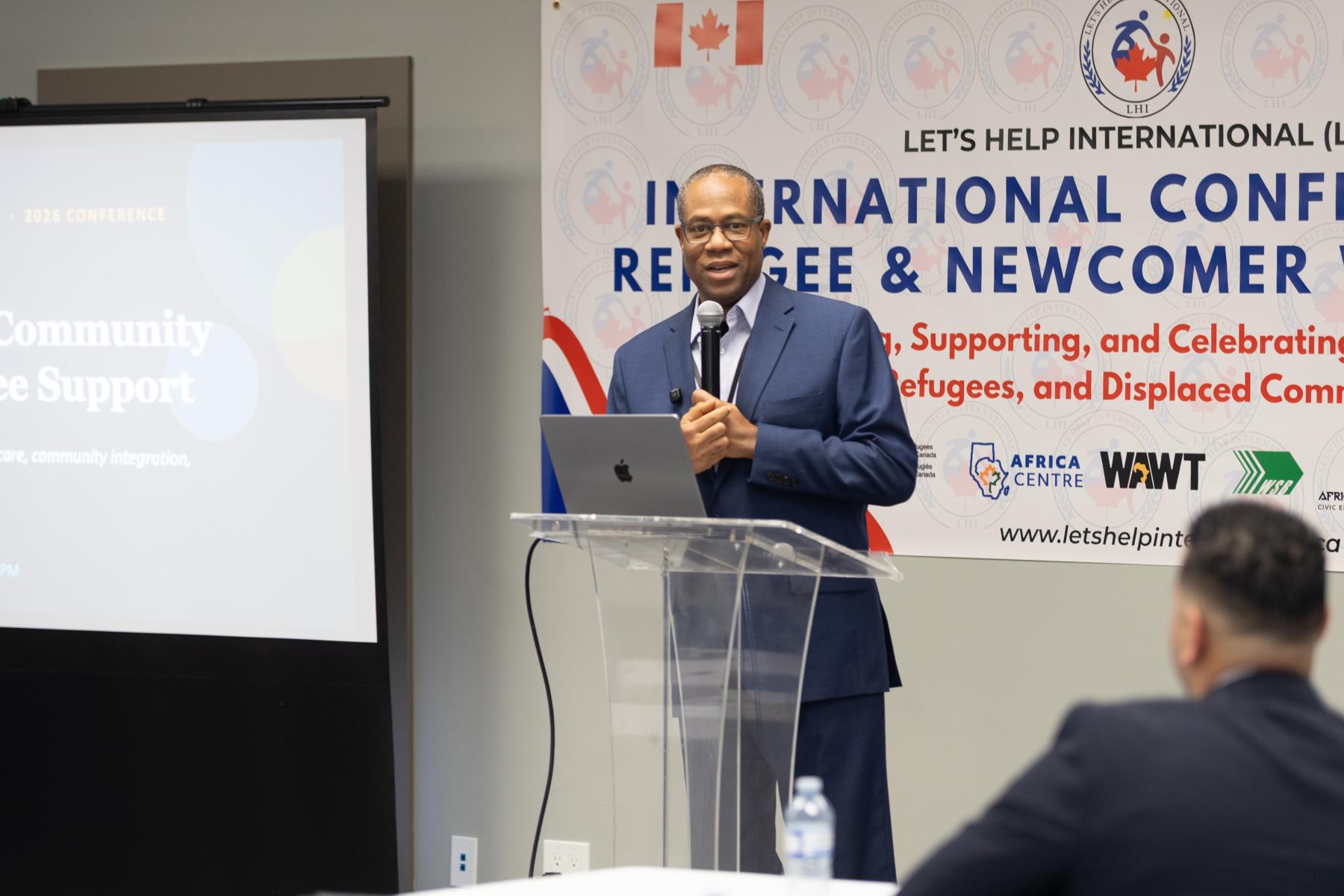
Pastor Dike Odimuko, Denomination Superintendent of All Nations Full Gospel Churches International (ANFGC), delivered a compelling presentation during the International Conference on Refugee & Newcomer Well-Being, organized by Let’s Help International (LHI) in June 2026 in Edmonton, Alberta. Speaking on the theme “Faith-Based & Community Roles in Refugee Support,” Pastor Odimuko challenged faith communities to move beyond charity and become long-term partners in helping refugees rebuild their lives with dignity, hope, and belonging.
The conference brought together humanitarian leaders, policymakers, researchers, settlement professionals, and community organizations to explore practical and innovative approaches to improving the well-being of refugees and newcomers in Canada.
Refugees Arrive With More Than Their Luggage
Pastor Odimuko reminded participants that refugees often arrive after leaving behind far more than their homes. Many have lost careers, educational credentials, professional networks, familiar languages, and trusted institutions. They must rebuild almost every aspect of their lives—from employment and housing to friendships and confidence.
Yet despite these enormous losses, they also bring remarkable strengths.
“The things that endure are faith, family, resilience, dignity, and hope for the future.”
These qualities, he noted, provide the foundation upon which successful settlement can be built.
Why Faith Communities Are Uniquely Positioned to Help
According to Pastor Odimuko, faith-based organizations occupy a unique place within society because they already possess the infrastructure and relationships that newcomers need.
Unlike short-term programs that end after a few weeks, churches, mosques, temples, and other faith communities offer permanent places where people can build lasting relationships. They have volunteers, gathering spaces, trusted leaders, and members representing virtually every profession—from doctors and teachers to psychologists, entrepreneurs, and social workers.
Most importantly, faith communities are built on a shared moral responsibility to welcome the stranger.
He explained that effective refugee support begins with three essential commitments:
- Presence — being consistently available during difficult moments.
- Belonging — helping newcomers become genuine members of the community rather than temporary guests.
- Advocacy — using the moral influence of faith communities to speak for those whose voices are often overlooked.
Supporting the Whole Person
Pastor Odimuko emphasized that refugee support must address spiritual, emotional, social, and practical needs together.
Spiritually, faith communities can provide spaces for worship, prayer, hope, and meaning while welcoming people regardless of their religious background or beliefs.
Emotionally, many refugees carry deep trauma from war, displacement, and loss. Although pastors and faith leaders are not mental health professionals, they can offer compassionate listening, recognize signs of distress, and connect individuals with qualified mental health practitioners when specialized care is needed.
Socially, faith communities help combat one of the greatest challenges newcomers face: loneliness.
Through genuine friendships and regular community life, newcomers gain a sense of belonging that no government brochure or settlement handbook can provide.
Practical Support That Changes Lives
Pastor Odimuko outlined numerous ways faith communities can assist refugees during settlement, including:
- Connecting families with housing opportunities.
- Supporting language learning and literacy.
- Assisting with employment preparation and credential recognition.
- Helping newcomers navigate government services and paperwork.
- Providing food and other basic necessities.
- Accompanying refugees to medical appointments and important meetings.
- Connecting individuals with community resources and professional networks.
These practical acts of service, he noted, often become the bridge toward long-term independence.
Listening Before Leading
Drawing from the work of All Nations International Development Agency (ANIDA), the humanitarian organization established by All Nations Full Gospel Churches International, Pastor Odimuko stressed that effective assistance begins with listening rather than assuming.
Instead of deciding what refugees need, organizations should first ask communities about their priorities and design solutions together with them.
He encouraged organizations to move beyond simply providing assistance toward developing leadership within refugee communities themselves.
The goal, he said, should not merely be helping people survive but empowering them to eventually become leaders who help others.
Avoiding New Forms of Dependency
One of the strongest messages of the presentation was the importance of avoiding dependency.
While emergency assistance is necessary, lasting success comes from equipping refugees with knowledge, education, opportunities, and leadership skills that allow them to thrive independently.
Pastor Odimuko challenged organizations to measure success not by the number of services delivered but by the number of newcomers who eventually become contributors to their communities and mentors for future arrivals.
Collaboration Is Essential
Recognizing that no single organization possesses every answer, Pastor Odimuko called for stronger partnerships among:
- Faith communities
- Settlement agencies
- Governments
- Schools
- Employers
- Healthcare providers
- Mental health professionals
- Diaspora organizations
- Community volunteers
Faith communities, he argued, can serve as connectors that bring these various sectors together for the benefit of refugee families.
“No one welcomes alone,” he reminded participants.
Best Practices for Refugee Support
Pastor Odimuko encouraged organizations to adopt several guiding principles:
- Listen before acting.
- Build long-term relationships rather than one-time events.
- Train and support volunteers.
- Respect each person’s culture and background.
- Partner widely and refer cases beyond one’s expertise.
He also warned against common pitfalls, including creating dependency, launching unsustainable projects, assuming every newcomer shares the same needs, and duplicating services already offered by other organizations.
A Call to Welcome the Stranger
Closing his presentation, Pastor Odimuko challenged every participant to consider one practical action their community could begin within the next month to better welcome refugees and newcomers.
He summarized his message with three simple but powerful principles:
- Choose presence over programs.
- Listen first, then lead together with refugees.
- Recognize that welcoming newcomers is a shared responsibility that requires collaboration.
His address reinforced one of the conference’s central themes: successful refugee integration depends not only on government policies or settlement agencies, but also on compassionate communities willing to build relationships that restore dignity, hope, and belonging.